A MuleSoft engagement covers considerably more than platform licensing; the services layer is where most of the actual value gets delivered.
1. Integration Strategy and Application Landscape Mapping: Before any development starts, mapping the existing application landscape, data flows, and highest-friction integration points determines where the platform will deliver value fastest, typically starting with MuleSoft integration for ERP and CRM systems, along with core eCommerce platforms.
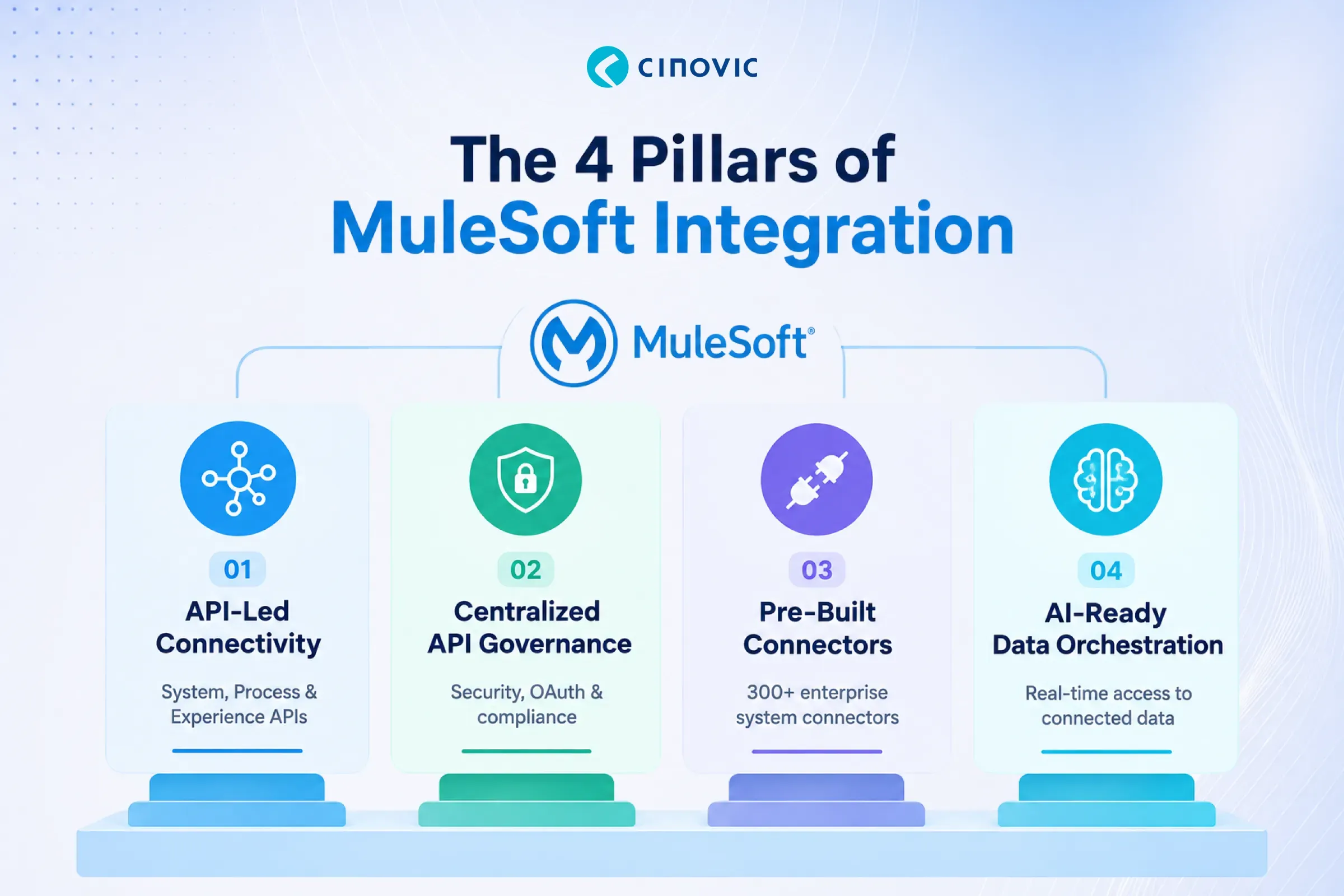
2. API-Led Architecture Design and Development: Building the System, Process, and Experience API layers according to MuleSoft's reuse-first model, so early integrations become reusable building blocks for everything that follows rather than isolated, disposable connections. Our full accounting integration platform case study shows this approach in practice, connecting multiple financial systems into one unified layer.
3. Governance and Security Implementation: Establishing centralized API management, authentication, rate limiting, monitoring, and compliance controls, as regulatory requirements and AI-driven security risks make a single control plane increasingly necessary rather than optional.
4. AI and Agentforce Readiness: Configuring MuleSoft as the integration backbone specifically so AI agents and tools like Salesforce Agentforce have complete, real-time data access, since fragmented data is one of the most commonly cited barriers to reliable AI performance