Buyer Invoice Sync - Creates clear, accurate accounting records for buyer charges automatically after a sale, reducing manual data entry and the risk of missed invoices
Who Benefits
FinanceOperations

Industry
Focus Area
Core Platform
Integration Layer
Project Type
Invoices, settlements, payments, and bills are managed in one system, eliminating repeated data entry.
Sales, operations, and finance work from shared transaction records with structured workflows.
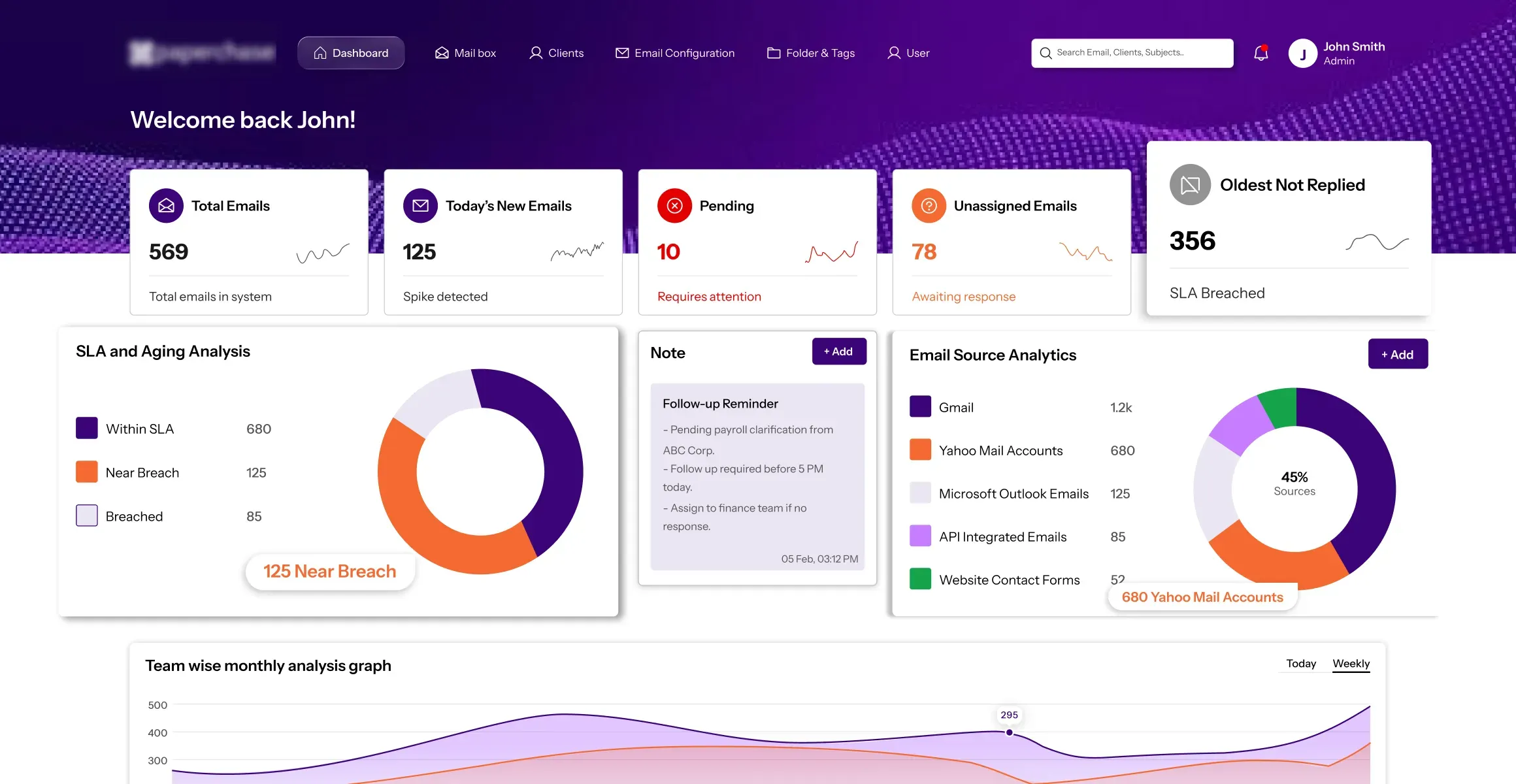
Live sync monitoring shows posted, pending, and attention-required transactions.
Dashboards provide visibility into accounting activity, sync health, and financial status.
Challenge
Manual Accounting Work
Root Cause:
Staff were spending too much time re-entering the same data across disconnected systems after every auction cycle
Business Impact:
Operational overhead increased with sale volume; finance teams fell behind on reconciliation and close cycles
Challenge
Disconnected Team Handoffs
Root Cause:
Sales, operations, and finance had no shared system — updates were passed manually between departments after each auction
Business Impact:
Day-to-day tasks slowed down and critical updates were frequently lost or delayed at handoff points
Challenge
Complex Settlement Logic
Root Cause:
Commissions, fees, and consignor payouts had to be calculated accurately across every transaction with no automated support
Business Impact:
Revenue leakage and payout errors were hard to catch without a structured, system-driven settlement workflow
Challenge
Limited Manager Visibility
Root Cause:
Leaders had no fast, reliable way to see sync status, what had posted, and what still needed review in one place
Business Impact:
Management decisions were delayed because insight required chasing reports from multiple people and systems
Challenge
Future Growth Pressure
Root Cause:
The business needed an integration structure that could support more than one accounting provider as they grew
Business Impact:
Single-provider dependency created long-term lock-in risk and made future expansion costly and complex
Principle
Provider-Agnostic Architecture
What We Built
Built the accounting logic separately from the provider-specific integration layer — QuickBooks handles today's needs while the architecture is already structured to support Xero and future providers without rebuilding
Why It Matters
Teams are never locked into one accounting platform; the business can expand or switch providers with significantly less effort and risk
Principle
End-to-End Accounting Lifecycle in One Platform
What We Built
Connected every stage — buyer invoices, consignor settlements, commissions, payments, vendor bills, and sync monitoring — into a single, unified accounting module that covers the full auction finance workflow
Why It Matters
Teams stop switching between tools and chasing each other for updates; the system holds the complete financial operation together from sale to settlement
Principle
Structured Sync Visibility & Error Handling
What We Built
Built sync monitoring, review states, and status tracking directly into the platform so finance and operations teams always know what posted, what failed, and what needs attention, without digging through logs
Why It Matters
Errors surface earlier, before they reach month-end close; managers get a reliable picture of accounting progress without waiting for manual reports
Buyer Invoice Sync - Creates clear, accurate accounting records for buyer charges automatically after a sale, reducing manual data entry and the risk of missed invoices
Consignor Settlement Tracking - Connects payout totals, commissions, and settlement records in one automated flow so consignor payouts are always accurate and traceable
Payment Matching - Helps staff match incoming payments to the correct invoice or payout record, reducing reconciliation time and the risk of misallocated payments
Vendor Bill Workflow - Supports the accounting side of consignor settlements in a structured, consistent way, keeping vendor bills aligned with settlement records
Sync Monitoring - Makes it easy for finance and operations teams to see what posted, what failed, and what still needs attention, in real time, without manual checking
Multi-Company Controls - Keeps each company's accounting setup, rules, and reporting completely separate, supporting auction businesses that operate multiple entities or brands
Backorder Tracking & Order Checks - Scheduled jobs run regular checks on open orders, backorder status, and allocation decisions, giving operations teams early visibility into what needs attention before it becomes a problem
Shared ODS API & Database Gateway - Provides a single controlled interface for all processor applications to interact with the database, handling merge, select, and stored procedure calls in a consistent, auditable way
Error Handling, Retry & Logging - Every integration flow includes structured error handling, retry logic, and audit trail logging so failures are visible, recoverable, and never silently lost across any part of the platform
Backend

Database

Accounting Integration
Future Integration
Async Processing
Event Handling
Finance Reporting
Less Duplicate Data Entry
Buyer invoices, settlements, payments, and vendor bills are handled in one system, removing repeated data entry across tools and departments
Cleaner Handoffs Between Departments
Sales, operations, and finance work from the same transaction and sync records with structured state transitions- no more manual email handoffs
Better Operational Control Over Accounting Status
Live sync monitoring means finance teams always know what has posted, what is pending, and what needs attention, without chasing reports
Earlier Error Detection
Sync failures, settlement discrepancies, and payment mismatches surface through structured workflows, caught before they reach month-end close
Stronger Management Visibility
Managers can review accounting activity, sync health, and financial status from the dashboard without waiting for manual reports from the team
Optimize your cloud infrastructure, implement robust solutions, and stay ahead of trends with our resource hub.
Join 100+ teams scaling with Cinovic. Fill out the form below to get personalised tour of the platform.
An auction house accounting integration platform connects key financial workflows such as buyer invoices, consignor settlements, payments, vendor bills, and accounting synchronization in one centralized system.
Yes. The platform integrates with the QuickBooks Online API to support buyer invoices, settlements, payments, and accounting synchronization.
It connects payout totals, commissions, and settlement records through an automated workflow, helping finance teams maintain accurate and traceable consignor payouts.
Yes. The payment matching workflow helps staff connect incoming payments with the correct invoice or payout record, reducing reconciliation effort and the risk of misallocated payments.
Yes. The architecture supports separate accounting setups for multiple companies or brands and is designed to support additional accounting providers such as Xero without requiring the core accounting platform to be rebuilt.