AI Chat Widget - Customer-facing widget that answers common questions instantly using the knowledge base. (Customers, Customer Experience)

AI-Powered Customer Support Automation
This case study is a real-world example of our work as an AI development company built for a retail and consumer services business whose support queue had grown faster than their team could scale. We designed an LLM- and RAG-based support layer that answers common questions instantly, hands off complex cases to human agents with full context, and gets more accurate over time as it learns from every interaction.
Industry
AI development
Industry
Retail & Consumer Services
Focus Area
AI-Driven Customer Support
Core Technology
LLM + RAG Pipeline
Frontend / Interface
Web Chat Widget + Agent Console
Outcomes
Outcomes
Lower First Response Time
Instant AI-generated first responses replaced multi-hour queue waits for common questions.
Reduced Repetitive Ticket Load
Common questions are deflected before reaching a human agent.
Consistent Answers
Every response draws from the same grounded knowledge base.
24/7 Coverage
Customers get an instant answer regardless of time zone or business hours.
Business Challenges
High Ticket Volume
Root Cause: Support queues grew faster than headcount could scale.
Business Impact: Response times slipped, and customer satisfaction scores declined.
Repetitive Queries
Root Cause: The majority of tickets were repeat questions already answered in help docs.
Business Impact: Agents spent time on low-value queries instead of complex cases.
Inconsistent Answers
Root Cause: Different agents gave different answers to the same question.
Business Impact: Customers received conflicting information, increasing follow-up tickets.
No After-Hours Coverage
Root Cause: Support was only staffed during business hours.
Business Impact: Customers in other time zones waited overnight for a first response.
Knowledge Scattered Across Tools
Root Cause: Product docs, policy pages, and past tickets lived in separate systems.
Business Impact: Agents lost time searching multiple tools before replying to a single ticket.
Solution Approach
Retrieval-Augmented Generation (RAG)
What We Built: Indexed product docs, policies, and resolved tickets into a searchable knowledge layer feeding an LLM.
Why It Matters: Answers stay grounded in real company content instead of the model guessing.
Human-in-the-Loop Escalation
What We Built: Built confidence-scored routing so uncertain or sensitive queries hand off to a human agent with full context.
Why It Matters: Customers get instant answers for simple queries without losing the safety net for complex ones.
Continuous Feedback Loop
What We Built: Agent edits and customer ratings feed back into the retrieval index and prompt tuning.
Why It Matters: Answer quality improves over time instead of staying static after launch.
Use Cases Delivered
Agent Co-Pilot - Suggests draft replies and relevant knowledge articles inside the agent console. (Support Agents, Agent Productivity)
Confidence-Based Routing - Automatically escalates low-confidence or sensitive queries to a human agent. (Support Agents, Customers, Workflow Routing)
Ticket Summarisation - Summarises long ticket threads so agents can catch up quickly. (Support Agents, Agent Productivity)
Multi-Language Responses - Detects customer language and responds in kind using the same knowledge base. (Customers, Customer Experience)
Sentiment Flagging - Flags frustrated or urgent messages for priority handling. (Support Leads, Quality & Escalation)
Analytics Dashboard - Tracks deflection rate, response time, and topic trends. (Support Leadership, Reporting)
Technologies and Tools
Core AI
Large Language Model (hosted API), Vector Database, RAG Orchestration Layer (custom build)
Backend
Python / Node.js services, PostgreSQL
Frontend
React (chat widget and agent console UI)
Integrations
Helpdesk platform, CRM
Infrastructure
Cloud hosting (multi-tenant)
Monitoring
Analytics & logging pipeline
Business Outcomes
Lower First Response Time: Instant AI-generated first responses replace multi-hour queue waits for common questions.
Reduced Repetitive Ticket Load: Common questions are deflected before reaching a human agent.
Consistent Answers: Every response draws from the same grounded knowledge base.
24/7 Coverage: Customers get an instant answer regardless of time zone or business hours.
Faster Agent Resolution: Co-pilot suggestions and ticket summaries cut average handling time.
Data-Driven Support Planning: Topic trend analytics help leadership plan staffing and documentation updates.
Recent Case Studies
Optimize your cloud infrastructure, implement robust solutions, and stay ahead of trends with our resource hub.
Retail
Hyva Storefront for a Fashion & Apparel Retailer
This case study is a real-world example of our work as a Hyva development company, rebuilding a fashion retailer's Magento 2 storefront on Hyva after the legacy Luma theme's heavy JavaScript and CSS payload was slowing down mobile pages and contributing to cart abandonment.
View Case Study
Hospitality & Retail | E-Commerce
Migrating 50 Million Orders to Magento 2: How We Cut the Timeline from 100 Days to 24 Hours
Cinovic rescued a stalled migration of 50 million orders to Magento 2 Open Source. A rebuilt process cut the timeline from about 100 days to 24 hours, then fixed the performance issues that followed.
View Case Study
Restaurants & Hospitality
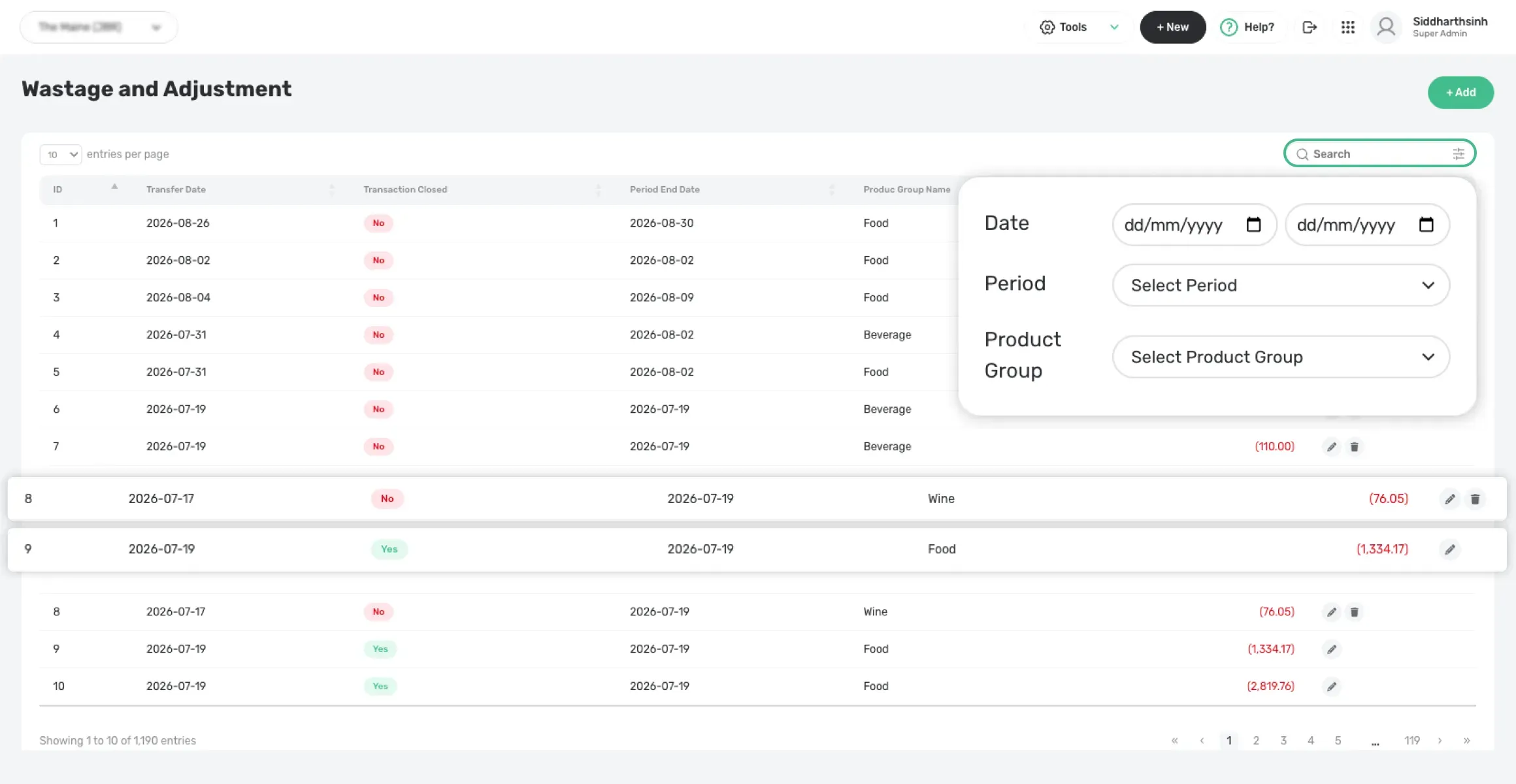
Restaurant Wastage & Stock Transfer Control
Discover how restaurant wastage and stock transfer control help track inventory movement, reduce product waste, and improve stock visibility across locations.
View Case Study
Let's Talk
See Cinovic's Expertise in Action Book Your Free 15-Minute Development Demo
Join 100+ teams scaling with Cinovic. Fill out the form below to get personalised tour of the platform.
Frequently Asked Questions About AI-Powered Customer Support Automation
It's a support layer that uses a large language model combined with retrieval-augmented generation (RAG) to answer common customer questions instantly, using a company's own documentation and past tickets as its knowledge source, while routing complex or sensitive queries to a human agent.
Retrieval-augmented generation pulls relevant, up-to-date content from a company's actual docs and policies before generating a response, so answers are grounded in real information instead of relying purely on what the model was trained on.
No. Confidence-scored routing handles simple, repetitive questions automatically and hands off uncertain or sensitive queries to a human agent with full conversation context, so agents focus on the cases that actually need them.
Yes. The system detects the customer's language and responds in kind, drawing from the same underlying knowledge base regardless of language.
Agent edits and customer ratings feed back into the retrieval index and prompt tuning, so the system's accuracy improves continuously rather than staying fixed at launch.
Typically, it covers the retrieval and knowledge-indexing layer, the LLM integration. It also includes confidence-based escalation logic, an agent-facing co-pilot, and the analytics needed to track deflection rate and response time; this project is one example of what that looks like end-to-end.
A basic chatbot integration usually just connects to a hosted model with a fixed prompt. Generative AI development services go further, building the retrieval pipeline, grounding responses in real company data, tuning escalation logic, and setting up the feedback loops that keep answer quality improving after launch.
Look for experience building the full loop, not just the model call: knowledge retrieval, confidence scoring, human handoff, and continuous feedback tuning. A co-pilot or chat widget that can't escalate cleanly to a human agent will erode trust quickly in production.