
Why Digital Transformation is Crucial for Business Growth in 2026

Table of Contents
In 2026, the term digital transformation has graduated from a corporate buzzword to a foundational requirement for survival. We are no longer in the era of “going digital”—we are in the era of being digital by default. For businesses today, the gap between the digital leaders and the laggards isn’t just a matter of efficiency; it’s a matter of market relevance.
Whether you are a scaling SME or an established enterprise, the landscape has shifted. Technology is no longer a support function in the basement; it is the very fabric of how value is created, delivered, and captured. At Cinovic, we believe that understanding the “why” behind this shift is the first step toward unlocking sustainable growth.
1. Meeting the "Instant" Expectations of Modern Customers
The consumer of 2026 lives in a world of hyper-personalization and instant gratification. They don’t compare your service to your direct competitor; they compare it to the best digital experience they’ve ever had—whether that’s a seamless one-click checkout or an AI bot that solves their problem in seconds.
The New Standard of CX
Digital transformation allows businesses to move from reactive service to proactive engagement. By integrating AI-driven insights and real-time data, companies can anticipate customer needs before the customer even voices them.
- Hyper-Personalization: Gone are the days of “Dear [First_Name]” emails. Today, it’s about dynamic interfaces that change based on user behavior.
- Omnichannel Fluidity: Customers expect to start a conversation on social media, move to a mobile app, and finish it in-store without ever repeating their story.
“In 2026, a single point increase in Customer Experience (CX) scores can result in millions of dollars in annual growth. Friction is the new enemy of loyalty.”
2. Bridging the Gap Between Ambition and Scalability
One of the biggest hurdles to growth is “operational friction.” As businesses grow, their manual processes often become bottlenecks. Digital transformation provides the scalable infrastructure needed to grow without a linear increase in costs.
Moving Beyond Legacy Constraints
Many organizations struggle because they are trying to build a 2026 business on 2016 infrastructure. Legacy systems are rigid; they don’t “talk” to new AI tools, and they make data-driven decisions nearly impossible.
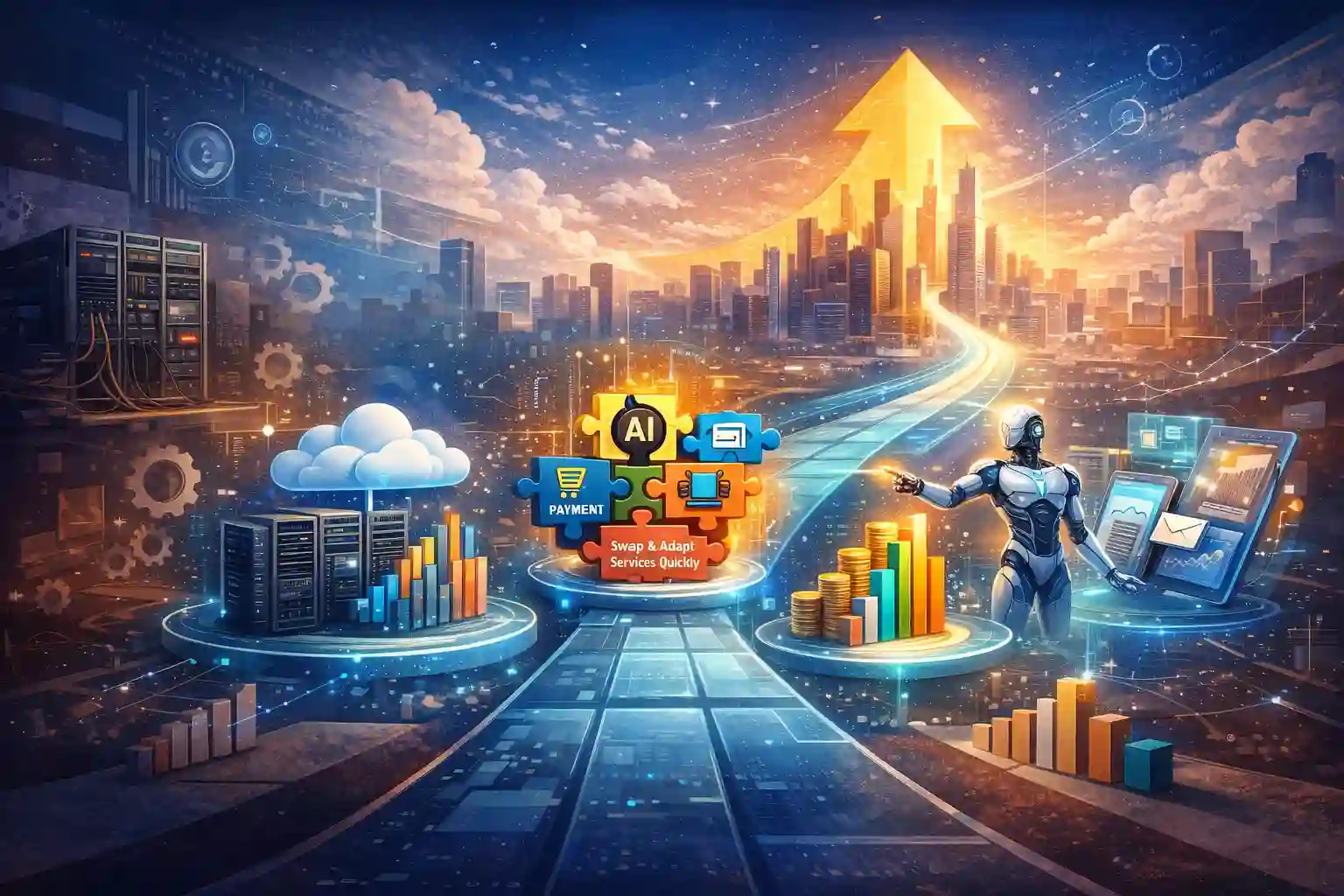
- Cloud-Native Platforms: Modernizing to the cloud allows for “on-demand” resources. If your traffic spikes by 500% during a flash sale, your infrastructure scales automatically.
- Composable Architecture: Instead of one giant, unchangeable system, businesses are moving toward modular “plug-and-play” services. This allows you to swap out a payment gateway or an AI engine in days, not months.
3. Turning "Data Overload" into "Decision Intelligence"
By 2026, most businesses are sitting on a goldmine of data, but very few are actually mining it. Digital transformation isn’t just about collecting data; it’s about creating a “Decision Intelligence” layer within your company.
The Shift to AI-First Operations
We have moved past simple automation (doing things faster) to autonomy (systems that act and adapt).
- Predictive Analytics: Instead of looking at last month’s sales report to see what happened, businesses use AI to predict what will happen next month.
- Real-Time Visibility: From supply chain disruptions to sudden shifts in buyer sentiment, digital tools provide a “cockpit” view of the business, allowing leaders to pivot instantly.
4. Attracting and Retaining the "Digital Native" Workforce
Growth isn’t just about customers; it’s about the people building your products. The workforce of 2026—dominated by Gen Z and Millennials—refuses to work with clunky, outdated tools.
Empowerment through Technology
Digital transformation improves employee retention by removing the “drudge work.”
- AI Copilots: When AI handles repetitive data entry or basic scheduling, your team can focus on high-value creative and strategic tasks.
- Collaborative Ecosystems: Tools that enable seamless hybrid work are no longer optional. A digitally transformed workplace fosters a culture of transparency and rapid idea-sharing, which is the ultimate engine for innovation.
5. Resilience: Surviving the "Unpredictable"
If the last few years have taught us anything, it’s that the only constant is volatility. Whether it’s a global supply chain crisis or a sudden shift in regulatory compliance, the businesses that survive are the ones that can change direction on a dime.
Digital transformation builds “organizational agility.”
- Cybersecurity as a Growth Driver: In 2026, trust is a currency. A secure, transparent digital framework protects your brand reputation and ensures business continuity in the face of increasing digital risks.
- Sustainable Operations: Digital tools allow for precise resource management, helping businesses reduce waste and meet the increasingly strict ESG (Environmental, Social, and Governance) standards that investors and customers now demand.
The 2026 Reality: Transform or Fade
The most dangerous phrase in business is “we’ve always done it this way.” In 2026, that mindset is a fast track to obsolescence. Digital transformation is the vehicle that takes you from being a participant in the market to being a leader.
At Cinovic, we don’t believe in “tech for tech’s sake.” We believe in strategic evolution. True transformation starts by identifying the core business problems—whether it’s high churn, slow time-to-market, or operational silos—and using technology as the lever to solve them.
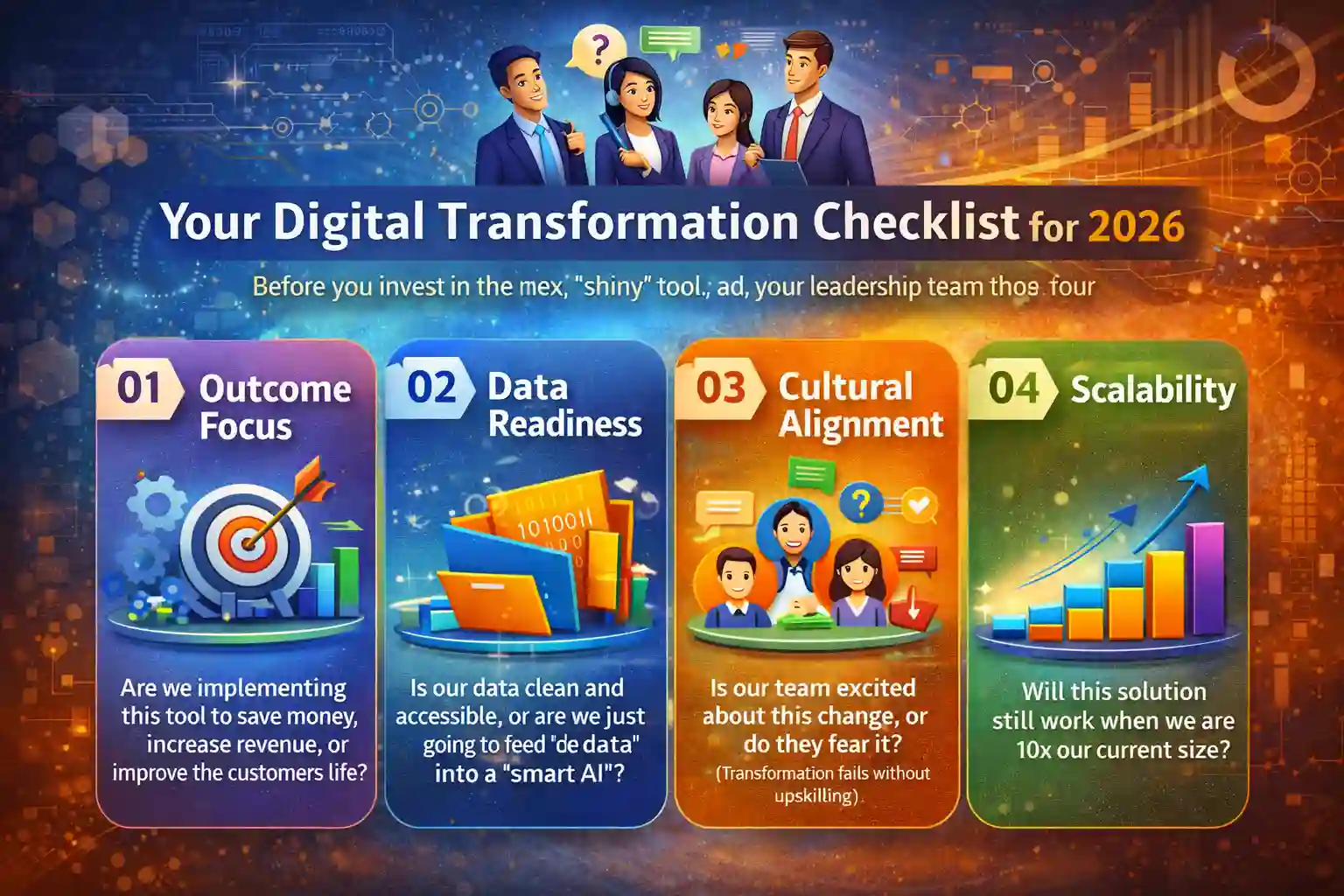
Your Digital Transformation Checklist for 2026
Before you invest in the next “shiny” tool, ask your leadership team these four questions:
1. Outcome Focus: Are we implementing this tool to save money, increase revenue, or improve the customer’s life? (If you can’t name one, don’t buy it).
2. Data Readiness: Is our data clean and accessible, or are we just going to feed “bad data” into a “smart AI”?
3. Cultural Alignment: Is our team excited about this change, or do they fear it? (Transformation fails without upskilling).
4. Scalability: Will this solution still work when we are 10x our current size?
How Cinovic Can Help
Navigating the complexities of digital transformation can be overwhelming. We specialize in helping businesses bridge the gap between their current reality and their digital potential. From cloud modernization to AI integration, we ensure your technology stack is an accelerator, not a handbrake.
Ready to future-proof your growth? Contact Cinovic today for a comprehensive digital maturity audit. Let’s turn your 2026 goals into a digital reality.